
Becoming a commercial pilot is an exciting and rewarding career, but it requires commitment, determination, and a clear understanding of the steps involved. This guide provides a comprehensive overview of the essential phases to become a commercial pilot in 2025, from obtaining a Private Pilot License (PPL) to achieving an Airline Transport Pilot License (ATPL). Each phase includes key information, required flight hours, and practical insights to help streamline your journey.
Obtain Your Private Pilot License (PPL)
The first step toward your career as a commercial pilot is obtaining your Private Pilot License (PPL). This license allows you to fly an aircraft for personal purposes and forms the foundation for all subsequent training. To obtain it, you need to complete a minimum of 40 flight hours. These hours consist of dual instruction (flying with an instructor) and solo flying, where you will learn the fundamentals of handling an aircraft.
The PPL training program includes various key flight maneuvers, and you will learn to handle the aircraft, plan flights, and manage emergency situations. Key components of the PPL training include:
- Basic flight maneuvers like climbs, turns, and descents
- Cross-country flight planning and navigation
- Operating the aircraft safely in different weather conditions
- Communication with air traffic control (ATC)
- Basic aircraft systems and emergency procedures
While 40 hours is the minimum regulatory requirement for the PPL, most pilots typically require more flight hours to feel fully prepared for the flight test. Some training programs may offer more comprehensive curriculums that allow you to gain additional experience before moving on to the next stage. After successfully completing both the written and practical flight exams, you will receive your PPL, the foundation of your future career as a pilot.
Obtain Your Commercial Pilot License (CPL)
After obtaining your PPL, the next step is to obtain your Commercial Pilot License (CPL). The CPL allows you to operate aircraft in exchange for payment or rent, marking the first step toward becoming a professional pilot. To obtain a CPL, you will need to complete additional training and accumulate at least 250 flight hours. This includes both individual and dual instruction, during which you will deepen your understanding of aviation principles and refine your skills in more complex flight maneuvers.
CPL training typically covers:
- Advanced flight maneuvers, including steep turns, stalls, and emergency procedures
- Night flying, teaching you to operate aircraft safely in the dark
- Cross-country flights, where you will plan and execute long-distance flights in real conditions
- In-depth navigation techniques and use of various flight planning tools
- Theoretical knowledge in aviation law, meteorology, and safety protocols
CPL training focuses on preparing you for commercial operations, including flying larger and more complex aircraft. You will also train to operate multi-engine aircraft, which are commonly used in commercial aviation. After completing the required flight hours and passing the written exams, you will receive your CPL, allowing you to start working as a commercial pilot.
Obtain a Type Rating (Airbus A320, B737, ATR 500, ATR 600)
Once you have obtained your CPL, the next step is to obtain a type rating. A type rating is a certification that qualifies you to fly specific aircraft models. This is a crucial step because, in commercial aviation, pilots must be certified to operate certain types of aircraft, such as the Airbus A320, Boeing 737 (B737), and ATR 500/600. These aircraft are widely used in both short- and long-haul commercial operations.
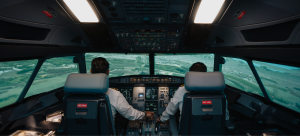
- Airbus A320: The Airbus A320 is one of the most popular narrow-body aircraft in the world, widely used by both low-cost and full-service airlines. To obtain the type rating for the A320, you will undergo theoretical and simulator training, learning the aircraft’s systems, flight performance characteristics, and emergency procedures.
- Boeing 737 (B737): Another staple of the global airline fleet, the B737 is a highly reliable and versatile aircraft. The B737 type rating focuses on the aircraft’s systems, flight characteristics, and Standard Operating Procedures (SOP). The B737 type rating is often a highly sought-after qualification, especially for pilots seeking to work with major airlines.
- ATR 500/600: The ATR family of aircraft, including the ATR 500 and ATR 600 series, is known for its turboprop engines and efficient performance, making it popular for regional flights. The type rating training for the ATR series involves gaining proficiency in operating the aircraft’s systems, handling the specific flight performance characteristics, and understanding the nuances of turboprop operations.
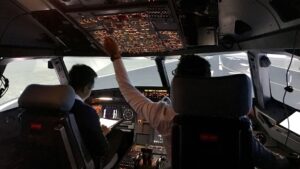
Type rating training typically involves between 50 and 100 hours of instruction, including time in simulators and ground training. You will need to pass both written and practical exams to demonstrate your mastery of the aircraft’s safe and efficient handling. Type ratings are crucial because they qualify you to fly these aircraft in commercial flights.
Gain Flight Experience
After obtaining your CPL and type rating, the next crucial phase is to accumulate flight experience. While you are already qualified to fly commercially, most pilots need to build flight hours before advancing to higher-level positions, such as a captain with a major airline. The aviation industry typically requires pilots to have a minimum of 1500 flight hours before they can apply for the Airline Transport Pilot License (ATPL), which is the next step in their career.
This phase is typically carried out by working in entry-level positions, such as:
- Flying for small charter companies, where you may be responsible for transporting passengers or cargo in smaller aircraft.
- Working as a flight instructor, where you will teach others to fly while also building your own hours.
- Flying for regional airlines, operating smaller aircraft on domestic routes.
- Participating in aerial reconnaissance or cargo flights
These positions help you gain experience in real flight operations and allow you to refine your skills as you accumulate hours. The flight hours you gain during this phase are invaluable for your future as a commercial pilot, as they demonstrate your competence and readiness to handle more complex flight scenarios.
Obtain Your Airline Transport Pilot License (ATPL)
The final step to becoming a fully qualified commercial pilot is obtaining your Airline Transport Pilot License (ATPL). The ATPL is the highest level of pilot certification and is required to work as an airline captain. To obtain your ATPL, you must meet the following requirements:
- Accumulate a minimum of 1,500 flight hours, including both pilot-in-command and co-pilot time.
- Complete written exams covering a wide range of topics, including aviation law, flight operations, aircraft systems, and advanced navigation.
- Pass a rigorous practical flight test to demonstrate your competence in handling complex aircraft in various conditions.
- Meet the medical and age requirements set by aviation authorities.
Obtaining the ATPL opens the doors to the opportunity to work as a captain with major airlines, operating large commercial aircraft on long-haul and international flights. It is the culmination of years of training and experience, and it prepares you to lead a crew in the most demanding and challenging flight environments.
Take Your Pilot Career As Far As You Want
At Global Training Aviation (GTA), we focus on supporting your professional development from the type rating phase onward. While GTA does not offer training for earlier stages, such as PPL and CPL, we pride ourselves on offering top-level type rating programs for popular aircraft such as the Airbus A320, Boeing 737 (B737), and ATR 500/600 series. Once you complete your type rating with GTA, we will support you throughout your career, providing continuous assistance as you gain valuable experience and move toward your ATPL. We are committed to being your trusted partner on this exciting journey to becoming a professional airline pilot.
For a more concise visual breakdown of the entire process to become a commercial pilot, be sure to check out the following video. It provides a step-by-step outline of each phase of training, allowing you to better understand the timeline and what to expect at each stage of your career path.
Frequently Asked Questions
How long does it take to obtain a Private Pilot License (PPL)?
El proceso para obtener una PPL requiere un mínimo de 40 horas de vuelo. Este tiempo puede variar según tu progreso y la calidad del entrenamiento, ya que muchos pilotos necesitan más horas para sentirse completamente preparados antes del examen de vuelo final.
What happens after I get my Private Pilot License (PPL)?
After obtaining your PPL, the next step is to obtain your Commercial Pilot License (CPL). To do so, you must accumulate at least 250 flight hours and complete additional training covering more complex flight maneuvers and theoretical knowledge in areas such as aviation law and meteorology.
What is type rating, and why is it important?
A type rating is a certification that allows you to fly specific aircraft models, such as the Airbus A320, Boeing 737 (B737), or ATR 500/600. This certification is essential to safely and efficiently operate commercial aircraft and is required for working in commercial airlines.