
In aviation, the distinction between a Private Pilot License (PPL) and a Commercial Pilot License (CPL) is significant. While both allow you to operate aircraft, there are crucial differences in training, requirements, and the privileges associated with each. In this article, we will explore the key differences between a private pilot license and a commercial pilot license, and what each means for aspiring aviators.
What is a Private Pilot License (PPL)?
A Private Pilot License (PPL) is the foundation of a pilot’s career. It allows you to fly an aircraft for personal use, without receiving compensation for your services. The main characteristics of a PPL include:
- Purpose: Flying for leisure, personal travel, or as a hobby
- Aircraft types: Typically limited to small, single-engine aircraft
- Flight hours: A minimum of 40 flight hours is required (e.g., in the U.S.)
- Training: Includes both theoretical knowledge and practical flight experience
- Medical requirements: Usually requires a third-class medical certificate
The PPL is an excellent starting point for those who want to fly for pleasure or as the first step toward a professional aviation career. However, it does not allow pilots to receive compensation for flying.
What is a Commercial Pilot License (CPL)?
A Commercial Pilot License (CPL) allows you to work as a professional pilot. Unlike the PPL, this license enables the holder to receive payment for their flying services, whether for airlines, private companies, or cargo operations. Key features of a CPL include:
- Purpose: Flying for compensation or hire
- Aircraft types: Covers a wider range of aircraft, from small planes to larger commercial aircraft
- Flight hours: A minimum of 250 flight hours is required (e.g., in the U.S.)
- Training: More intensive than PPL training, with advanced skills in flight maneuvers and commercial operations
- Medical requirements: Typically requires a second-class medical certificate
The CPL is the license that enables pilots to fly commercially and is often a step toward further specialization in aviation.
Key Differences in Training Requirements
Training for a PPL and a CPL differs significantly in terms of intensity, duration, and complexity:
- Flight hours: A PPL requires around 40 hours, while a CPL requires at least 250 hours
- Flight maneuvers: CPL training involves mastering more complex maneuvers such as night flying, cross-country flights, and emergency procedures
- Theoretical knowledge: CPL training includes a deeper understanding of aviation theory, including navigation, meteorology, and aircraft systems
- Instructor-led training: While both licenses include instructor-led sessions, the CPL requires a more comprehensive evaluation of advanced flight techniques
This additional training ensures that commercial pilots are fully prepared to handle the demands of professional aviation, from passenger safety to managing complex airspace systems.
Privileges: Private vs. Commercial Pilot
The privileges of each license are very different. While both allow aircraft operation, the main differences lie in the purpose of the flight and the level of responsibility:
Private Pilot:
- Can fly for personal purposes but cannot receive payment
- Limited to non-commercial aircraft (smaller private planes)
- Can carry passengers, but not for compensation or business purposes
Commercial Pilot:
- Can fly for compensation or hire (e.g., airlines, cargo flights, charter services)
- Can transport passengers for commercial purposes
- Can act as Pilot in Command (PIC) in commercial operations
This means that with a CPL, a pilot is legally authorized to take on professional aviation roles, while a PPL is limited to non-commercial flying.
Medical Requirements: A Key Difference
Medical requirements differ in terms of the class of certificate required:
- Private Pilot: Typically requires a third-class medical certificate, which is less strict
- Commercial Pilot: Requires a second-class medical certificate, with higher health and fitness standards
These stricter medical requirements reflect the greater responsibilities of commercial pilots.
Career Opportunities: From PPL to CPL
One of the key differences between private and commercial pilots is the range of career opportunities available:
Private Pilot:
PPL holders are limited to personal or recreational flying. While they may become flight instructors (with additional certification), they cannot be paid for most commercial activities.
Commercial Pilot:
CPL holders have access to a wide range of career opportunities, including:
- Airline pilots
- Charter flight pilots
- Flight instructors
- Agricultural pilots (e.g., crop spraying)
- Corporate pilots
The CPL opens the door to a professional aviation career, offering diverse opportunities.
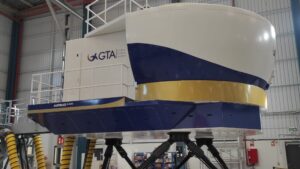
It also enables you to complete a Type Rating Course and be hired by an airline. This is where Global Training Aviation (GTA) comes into play — the first Approved Training Organization (ATO) in Spain, with training centers across three continents (Madrid, Spain; Jakarta, Indonesia; and Bogotá, Colombia).
Which License is Right for You?
Choosing between a Private Pilot License and a Commercial Pilot License depends on your goals as a pilot. If you want to fly for leisure, the PPL is the ideal option. However, if you aim to build a professional career in aviation, the CPL is the right path.
While the PPL lays the foundation, the CPL provides the skills, training, and certification needed to fly professionally and pursue a wide range of aviation careers. For many pilots, the journey begins with a PPL and progresses to a CPL as they prepare to become airline pilots or aviation professionals.
Whether private or commercial, both licenses open the door to exciting opportunities and unique experiences in the sky.
FAQ
What is a Private Pilot License (PPL)?
A Private Pilot License (PPL) allows you to fly an aircraft for personal use only, without being compensated for your services. It requires a minimum of 40 flight hours and includes both theoretical and practical training. With a PPL, you can fly small aircraft and take passengers for leisure, but you cannot receive payment for flying.
What is a Commercial Pilot License (CPL)?
A Commercial Pilot License (CPL) enables you to work as a professional pilot and be paid for flying. To obtain a CPL, you need to complete at least 250 flight hours and undergo advanced training in flight maneuvers and commercial aviation operations. This license allows you to fly for airlines, cargo operations, charter services, and more.
How many flight hours do I need for a PPL vs. a CPL?
-
PPL: Requires a minimum of 40 flight hours.
-
CPL: Requires a minimum of 250 flight hours to gain the necessary experience and expertise for commercial operations.