
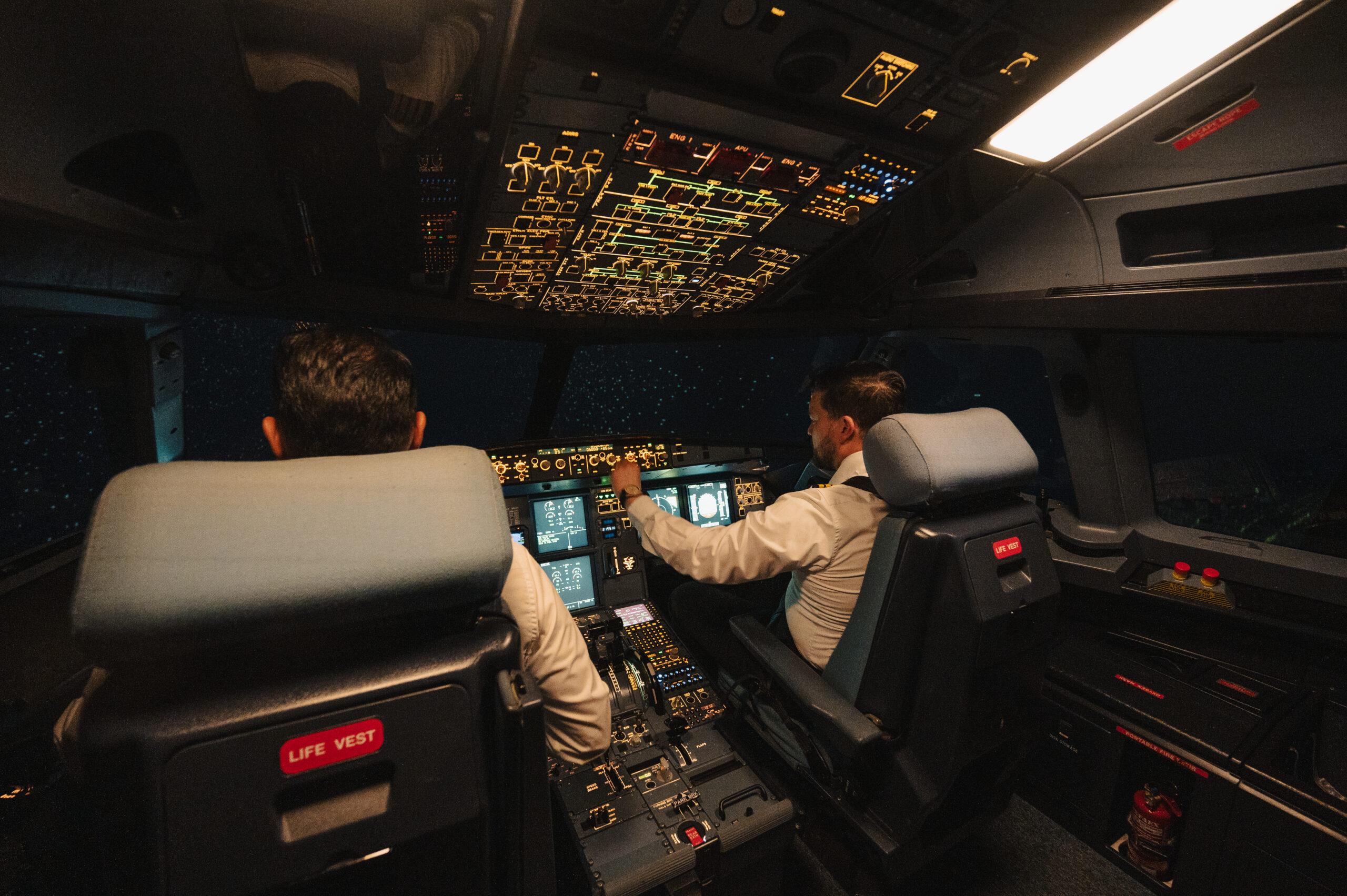
Los pilotos profesionales, especialmente los que trabajan para aerolíneas comerciales, se entrenan con simuladores de vuelo profesionales que reproducen con precisión las condiciones reales de vuelo. Estos dispositivos avanzados permiten a los pilotos practicar maniobras, procedimientos y situaciones de emergencia sin arriesgar vidas ni aeronaves. En esta guía, exploramos qué simuladores utilizan, cómo están diseñados y los diferentes tipos disponibles según su propósito.
¿Qué es un simulador de vuelo profesional?
Definición y componentes principales
Un simulador de vuelo profesional es un sistema tecnológico altamente avanzado que reproduce fielmente la experiencia de volar una aeronave. Está diseñado específicamente para la formación de pilotos en simuladores de vuelo , tanto en las etapas iniciales como en las sesiones de entrenamiento recurrentes.
Sus componentes principales incluyen:
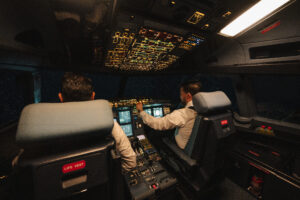
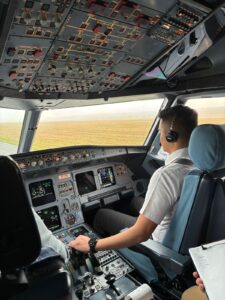
- Cabina realista : una réplica exacta de modelos de aviones como el simulador de vuelo de Airbus , el simulador de vuelo de Boeing o el ATR FFS , con todos los controles operativos.
- Sistema visual inmersivo : Pantallas panorámicas que simulan entornos reales con vistas de 180° o 360°.
- Plataforma de movimiento : recrea aceleraciones, turbulencias y maniobras.
- Sistemas de aviónica y navegación : Idénticos a los que se encuentran en los aviones reales.
- Estación del instructor : permite el control del entorno de entrenamiento, la introducción de fallas y la evaluación del desempeño.
Este tipo de simulador se considera el simulador de vuelo más realista disponible en la industria de la aviación.
Tipos de simuladores de vuelo según su uso
Los simuladores de vuelo se clasifican principalmente en dos categorías:
- Simulador de Vuelo Completo (FFS) : El simulador de vuelo completo más completo y con certificación oficial para entrenamiento profesional. Incluye movimiento, sonido envolvente y visuales de alta fidelidad. Se utiliza para habilitaciones de tipo y entrenamiento recurrente. Algunos ejemplos comunes son el A320 FFS , el B737 FFS , el ATR 500 y el ATR 600 FFS .
- Dispositivo de Entrenamiento de Vuelo (FTD) : Simuladores más sencillos sin plataformas de movimiento, pero equipados con cabinas realistas y sistemas visuales. Ideales para entrenamiento de procedimientos, navegación y preparación para la certificación. Los modelos más comunes incluyen VPT y FNPT .
Ambos tipos son imprescindibles para el entrenamiento de pilotos de aerolíneas en simuladores de vuelo y se utilizan en centros especializados como Global Training Aviation , que ofrece simuladores de vuelo profesionales para pilotos de aerolíneas en España y en todo el mundo.
¿Por qué los pilotos entrenan en simuladores de vuelo?
El uso de simuladores de vuelo profesionales en la formación de pilotos no solo es común, sino esencial. Estos dispositivos avanzados permiten a los pilotos entrenarse en entornos controlados, seguros y altamente realistas, mejorando su preparación para cualquier situación que pueda surgir durante un vuelo real.
Seguridad y reducción de riesgos
Una de las principales razones para entrenar en simuladores de vuelo para la formación de pilotos es la seguridad. En estos entornos virtuales, los instructores pueden simular fallos técnicos, condiciones meteorológicas adversas o emergencias médicas sin poner en riesgo vidas humanas ni aeronaves reales.
El entrenamiento de pilotos basado en simuladores permite la repetición de maniobras complejas, la práctica de aterrizajes en condiciones extremas y la toma de decisiones en tiempo real. Esto reduce significativamente los riesgos durante los vuelos reales y mejora la capacidad del piloto para responder ante imprevistos.
Entrenamiento en condiciones extremas
Los simuladores de vuelo completos (FFS) y los dispositivos de entrenamiento de vuelo (FTD) permiten recrear escenarios que serían imposibles o peligrosos de practicar en un vuelo real: tormentas eléctricas, fallos de motor, aterrizajes forzosos, etc.
Gracias a la tecnología avanzada de simuladores como los FFS del A320 , el FFS del B737 o el FFS del ATR , los pilotos pueden entrenar en condiciones extremas con total seguridad. Este tipo de preparación es crucial para los pilotos de aerolíneas, quienes deben estar preparados para afrontar cualquier situación durante las operaciones.
Mejorar la eficiencia y reducir los costes
Más allá de la seguridad, el uso de simuladores de vuelo en España y en todo el mundo ayuda a optimizar recursos. El entrenamiento en simuladores reduce los costos operativos al evitar el uso de aeronaves reales, combustible y espacio aéreo.
Centros como Global Training Aviation ofrecen programas de formación para pilotos de aerolíneas con simuladores de vuelo , lo que permite una práctica intensiva, eficiente y rentable. Esto beneficia tanto a las aerolíneas como a los pilotos, quienes obtienen acceso a más horas de formación en menos tiempo.
Principales simuladores de vuelo utilizados por los pilotos
Los pilotos, especialmente los que trabajan para aerolíneas comerciales, se entrenan en simuladores certificados que reproducen con precisión las condiciones reales de vuelo. Los más utilizados son los Simuladores de Vuelo Completo (FFS) y los Dispositivos de Entrenamiento de Vuelo (FTD) , cada uno con características específicas según el tipo de entrenamiento requerido.
Simulador de vuelo completo (FFS)
El Simulador de Vuelo Completo (FFS) es el simulador más avanzado y completo. Está certificado para entrenamiento oficial y habilitaciones de tipo. Sus principales características incluyen:
- Cabina realista con todos los controles funcionales.
- Sistema visual inmersivo de alta definición.
- Plataforma de movimiento con seis grados de libertad
- Sonido ambiental que simula las condiciones de vuelo.
Este simulador permite el entrenamiento de pilotos en simuladores de vuelo en condiciones extremas , simulando fallas técnicas, climatología adversa y procedimientos de emergencia.
Dispositivo de entrenamiento de vuelo (FTD)
El dispositivo de entrenamiento de vuelo (FTD) , como se mencionó anteriormente, es más simple y se utiliza principalmente para:
- Capacitación sobre procedimientos antes de las sesiones de FFS
- Práctica de navegación y comunicación
- Preparación para exámenes teóricos y prácticos.
Aunque no ofrece el mismo nivel de inmersión que un FFS, el FTD es una herramienta eficaz y económica para el entrenamiento de pilotos en simuladores de vuelo , especialmente durante las etapas iniciales.
Modelos de simuladores más comunes utilizados por las aerolíneas
Las aerolíneas suelen utilizar simuladores específicos para las aeronaves que operan. Los modelos más comunes incluyen:
- A320 FFS : Utilizado por las aerolíneas que operan el Airbus A320, uno de los aviones de corta y media distancia más populares.
- B737 FFS : Simulador del Boeing 737, ampliamente utilizado por aerolíneas de todo el mundo.
- ATR FFS : Simulador ATR 72, ideal para vuelos regionales.
Simuladores de vuelo en la formación de pilotos.
La formación de pilotos en simuladores de vuelo es esencial en el proceso de formación profesional. Gracias a los avances tecnológicos, los simuladores pueden reproducir con precisión todas las fases del vuelo, desde el arranque del motor hasta el aterrizaje en condiciones extremas. Esta metodología garantiza que los pilotos estén preparados para operar con seguridad y eficiencia en cualquier situación.
Etapas de entrenamiento
El entrenamiento en simulador se divide en varias etapas, adaptadas al nivel de experiencia del piloto y al tipo de aeronave que operará. Estas etapas incluyen:
- Familiarización con la cabina : uso de un dispositivo de entrenamiento de vuelo (FTD) para aprender sistemas y controles.
- Procedimientos normales : práctica de despegues, aterrizajes, navegación y comunicación.
- Procedimientos anormales y de emergencia : Entrenamiento en un Simulador de Vuelo Completo (FFS) para simular fallas técnicas, clima adverso y toma de decisiones críticas.
- Evaluaciones recurrentes : Simulaciones periódicas para mantener la habilitación de tipo y cumplir con los estándares de seguridad.
Simulación de procedimientos de emergencia.
Una de las mayores ventajas de la formación de pilotos en simuladores de vuelo es la posibilidad de practicar situaciones de emergencia sin riesgos reales. Los instructores pueden ser similares:
- Fallos del motor
- Incendios a bordo
- Despresurización de la cabina
- Aterrizajes forzosos en condiciones adversas
Estos escenarios se realizan en simuladores como el A320 FFS , el B737 FFS o el ATR FFS , lo que proporciona una experiencia inmersiva y realista. Este tipo de entrenamiento mejora la capacidad de reacción de los pilotos y fortalece la toma de decisiones bajo presión.
Colaboración y coordinación de la tripulación de cabina.
Más allá de las habilidades técnicas, los simuladores promueven el trabajo en equipo en la cabina. Los pilotos se entrenan junto con copilotos e instructores, desarrollando habilidades de comunicación, coordinación y liderazgo.
La colaboración entre tripulaciones es clave para garantizar la seguridad del vuelo. Esta capacitación es especialmente importante en la aviación comercial, donde cada decisión debe coordinarse y ejecutarse con precisión.
¿Cuál es el simulador de vuelo más realista?
El simulador de vuelo más realista es el Simulador de Vuelo Completo (FFS) . Se considera el estándar más alto porque:
- Reproduce fielmente la cabina de aviones reales como el A320 FFS , el B737 FFS o el ATR FFS.
- Incluye una plataforma de movimiento que simula aceleraciones, turbulencias y maniobras.
- Ofrece un sistema visual inmersivo de alta definición.
- Permite el entrenamiento en procedimientos normales y de emergencia con total precisión.
Preguntas frecuentes
¿Qué simuladores utilizan los pilotos de aerolíneas?
Los pilotos de aerolíneas se entrenan principalmente en Simuladores de Vuelo Completo (FFS) , como el A320 FFS , el B737 FFS o el ATR FFS , que ofrecen una experiencia inmersiva y están certificados para la formación oficial. También utilizan Dispositivos de Entrenamiento de Vuelo (FTD) para la práctica de procedimientos y navegación, especialmente en las primeras etapas de la habilitación de tipo.
¿Cuál es el mejor simulador para nuevos pilotos?
Para los nuevos pilotos que se entrenan en aviones comerciales, el mejor simulador depende del tipo de aeronave que vayan a operar. Los modelos recomendados incluyen:
- A320 FFS : Ideal para entrenamiento del Airbus A320, común en vuelos de corta y media distancia.
- B737 FFS : Perfecto para pilotos que se preparan para volar el Boeing 737, ampliamente utilizado por aerolíneas de todo el mundo.
- ATR FFS : Recomendado para entrenamiento de vuelo regional con aviones turbohélice como el ATR 72.
¿Cuánto cuesta un simulador de vuelo profesional?
El precio de un simulador de vuelo profesional varía según el modelo y el nivel de realismo. Un simulador de vuelo completo puede costar entre 8 y 15 millones de euros, mientras que un simulador de vuelo completo (FTD) es significativamente más económico. Centros como Global Training Aviation ofrecen acceso a estos simuladores sin necesidad de comprarlos.