
A320, B737 and ATR Type Rating programmes fully aligned with the new DGCA requirements
Pilot training is constantly evolving. As aviation incorporates new procedures, technologies and safety knowledge, aviation authorities also update their training standards to reflect the demands of real-world operations.
The Directorate General of Civil Aviation (DGCA) in India has introduced a new revision of the requirements applicable to Type Rating training, raising certain standards related to safety, simulator training and pilot assessment. If you want to see how the DGCA compares with other major regulators, read our guide on the differences between EASA, FAA and DGCA certifications.
The new DGCA CAR Revision 2 comes into effect on 7 September 2026.
For GTA, this update has not simply meant modifying a training document.
Our A320, B737 and ATR Type Rating programmes have been reviewed and adapted to meet the new requirements from the beginning of their implementation.
Because for us, being prepared does not mean adapting when a regulation comes into force.
It means being ready beforehand.
A New Stage for DGCA Type Rating Training
The updated regulation introduces changes aimed at strengthening the safety, quality and efficiency of the training process.
One of the most significant elements is the specific integration of Upset Prevention and Recovery Training (UPRT) into the Type Rating programme, together with a new structure for the pilot’s final assessment.
Under GTA’s updated programme, UPRT includes:
–5 hours of theoretical training
–2 hours as Pilot Flying in a Level D Full Flight Simulator
The objective is to provide pilots with dedicated preparation for the prevention and recovery of loss-of-control situations, integrating this knowledge into practical simulator training.
The new structure also provides for a single simulator skill test integrating Day & Night, combining the relevant IR and PPC elements into one two-hour assessment conducted in a Level D Full Flight Simulator by an independent examiner.
These changes are not simply administrative.
They affect the way a DGCA Type Rating is structured and delivered. And therefore, they require a training organization to have the technical capability, infrastructure and procedures necessary to implement them correctly.
GTA Is Ready for the New DGCA CAR Rev. 2
At GTA, we have reviewed and updated our three Type Rating programmes for the Indian market:
Airbus A320 / A320neo Type Rating
A fully revised programme adapted to the new DGCA requirements.
Boeing B737 Type Rating
An updated programme designed to comply with CAR Rev. 2 and the new training and assessment structure.
ATR Type Rating
A revised programme incorporating the new requirements into its training structure.
This means that pilots starting their training at GTA can complete their programme under a structure specifically designed around the new standard from day one.
Adapting a Type Rating Requires Much More Than Changing a Training Programme
A regulatory update may appear, from the outside, to be primarily a documentation issue.
In an advanced aviation training environment, however, regulatory changes can affect multiple elements of the training process.
When new requirements introduce changes related to simulator hours, UPRT, assessment procedures or the use of specific training devices, the training organization must be able to ensure that its entire training infrastructure can support those changes.
And there is an important distinction here.
Not every training centre or simulator can automatically adapt to every new regulatory requirement.
The ability to adapt depends, among other factors, on the configuration of the training device, its certification, its technical capabilities and its ability to be properly integrated into the approved training programme.
Having access to a Full Flight Simulator is therefore about much more than having advanced technology.
It means having a training infrastructure capable of evolving alongside regulatory requirements and the needs of modern pilot training.
At GTA, this adaptation has not represented a limitation.
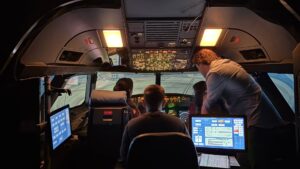
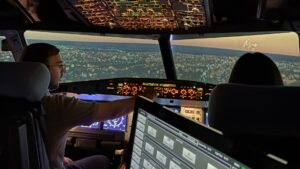
Our own fleet includes Level D Full Flight Simulators for A320/A320neo, B737 and ATR, qualified under CS-FSTD Issue 2, allowing us to integrate the new training requirements into our own infrastructure.
Technology is an essential tool.
But true adaptability comes from bringing technology, procedures, instructors and methodology together.
A Training Programme Structured from Beginning to End
GTA’s new DGCA Type Rating structure provides a complete training pathway.
The programme includes:
72 hours of Ground School
Systems, performance and procedures.
12 + 20 hours of MCC / JIT
Theoretical training and Full Flight Simulator training.
5 + 2 hours of UPRT
Theoretical training and two hours as Pilot Flying in a Level D Full Flight Simulator.
8 Type Rating Simulator sessions of 4 hours
Specific training in a Level D Full Flight Simulator.
1 LOFT session
Line-Oriented Flight Training based on operational scenarios.
2-hour Skill Test
A single assessment integrating Day & Night.
The complete programme is designed to be completed within a maximum of 45 working days, according to GTA’s programme structure.
But a complete training structure alone does not guarantee effective training.
And this is where GTA’s training philosophy becomes essential.
Technology and Methodology: Two Parts of the Same Training Experience
At GTA, we believe that a Level D Full Flight Simulator is an extraordinary training tool.
But we also believe that a simulator, on its own, does not train a pilot.
Technology makes it possible to reproduce an operational environment with extraordinary accuracy.
The instructor turns that environment into a learning experience.
And methodology provides the structure that makes that learning meaningful.
That is why our DGCA Type Rating programmes are delivered within the framework of ACT! – Aviation Collaborative Training, our own methodology that places the student at the centre of the learning process and aims to develop not only technical knowledge and skills, but also competencies that can be applied to real-world operations.
The GTA methodology integrates elements such as:
– Development Teaching
– Competency-Based Training (CBTA)
–Competency-Based Assessment
– Facilitated Debriefing
–Aula Magna
–Threat and Error Management (TEM)
–Upset Prevention and Recovery Training (UPRT)
The objective is not simply for a pilot to remember which procedure to execute.
It is for the pilot to understand what is happening, analyse the situation and make the best possible decision.
This philosophy is captured in the idea at the heart of our training model:
Training Professionals to Think Beyond Procedures.
From Ground Training to the Full Flight Simulator
Another fundamental element of GTA’s training philosophy is that learning does not begin when a pilot enters a Full Flight Simulator for the first time.
Before reaching the FFS, students can work on procedures, systems and aircraft automation using different training tools and devices.
The combination of Classroom, Mock-up, VPT, FNPT and FFS allows knowledge and skills to be progressively developed before students face increasingly complex operational scenarios.
This is particularly important in intensive programmes such as a Type Rating.
The objective is for each training phase to prepare the pilot for the next one.
First, understand.
Then, practise.
Next, apply.
And finally, demonstrate the ability to make decisions and perform effectively in a realistic operational environment.
A Regulatory Adaptation That Also Reinforces Our Training Philosophy
The new DGCA CAR Rev. 2 establishes new training requirements.
For GTA, however, adapting to them does not mean abandoning our methodology.
Quite the opposite.
The new structure allows us to continue developing a training philosophy that is already deeply integrated into our programmes.
The specific integration of UPRT, Full Flight Simulator training, LOFT, competency-based assessment and decision-making is part of a broader approach to training that goes beyond simply preparing a pilot for an examination.
Because obtaining a Type Rating is an important objective.
But it is not the final objective.
The real goal is to prepare pilots for what comes next.
For the airline.
For line operations.
For situations that do not appear exactly as they do in a manual.
For scenarios in which pilots must interpret information, prioritise, communicate and make decisions.
Ready for the New DGCA Standard from Day One
The new DGCA requirements raise the training standard for pilots preparing to begin their professional careers in India’s commercial aviation sector.
At GTA, we have chosen to turn this regulatory update into an opportunity to continue improving our training programmes.
Our A320/A320neo, B737 and ATR Type Rating programmes have been reviewed and adapted to DGCA CAR Rev. 2, incorporating Ground School, MCC/JIT, UPRT, Level D Full Flight Simulator training, LOFT and the new integrated final assessment structure.
But being ready is not simply about complying with a regulation.
It means having the people, technology and methodology required to turn every requirement into a better learning experience.
At GTA, we have the infrastructure, simulators, instructors and training methodology to do exactly that.
Because the objective is not simply to obtain a Type Rating.
It is to prepare aviators capable of making the best decisions in the real world.
Training Professionals to Think Beyond Procedures.